There are figures in the psyche that are not you.
Carl Jung gave them names. Six are shown here, each illustrated with a real artifact from the visual tradition Jung drew on — paintings and manuscripts whose creators died long before he did. None of the images are Jung's own work.

The face you wear, the face you forget you're wearing.
Persona, in the Latin theatre, was the mask the actor held to the face. Jung kept the word for what it pointed at: the face the social world meets. Not pretence exactly. Most of the time the persona is necessary and almost involuntary — the version of you that knows how to be a colleague, a daughter, a customer in a shop. The trouble is not that there is a persona. The trouble is forgetting that it is one.
The clinical observation is that people who become identified with their persona — who believe the role is the whole — get into a particular kind of difficulty. The unlived parts don't disappear; they accumulate. They show up later as exhaustion, or boredom, or a slow leak of meaning, or the strange fact that a successful life feels like someone else's. Jung gave it a name: the persona inflation.
Neuroscience has no persona region. What it does have is research on self-monitoring, on the prefrontal effort of maintaining a presented self, on the cost of suppression over time. The mechanism doesn't map cleanly onto Jung's term, but the cost is convergent: a self continuously performed is also a self continuously edited, and the editing has a metabolic price.
Holbein's lady is composed, finished, sittable. The squirrel on her arm and the starling at her shoulder are accessories of a different order — small private creatures kept close to a public face. What the portrait is asking, very quietly, is which of them is more like her.
What you have refused to know about yourself.
The shadow is what you have refused to know about yourself. Not the deepest, darkest secret — those you usually know. The shadow is what you can't see because seeing it would require restructuring who you think you are. The cruelty in the gentle person. The neediness in the self-sufficient one. The contempt in the empath.
Jung's claim was that everyone has one, that it isn't optional, and that pretending otherwise is the principal mechanism by which people do harm. The shadow doesn't go away by being denied; it acts out through projection. What you can't see in yourself, you see everywhere in others — often with a strange intensity that gives the projection away.
Neuroscience has nothing direct to say about the shadow. There is no shadow region of the brain. But research on inhibition, suppression, and confabulation describes the mechanism by which content is held outside conscious access, and how the cost of holding it grows over time. The phenomenology is Jung's. The cost is real.
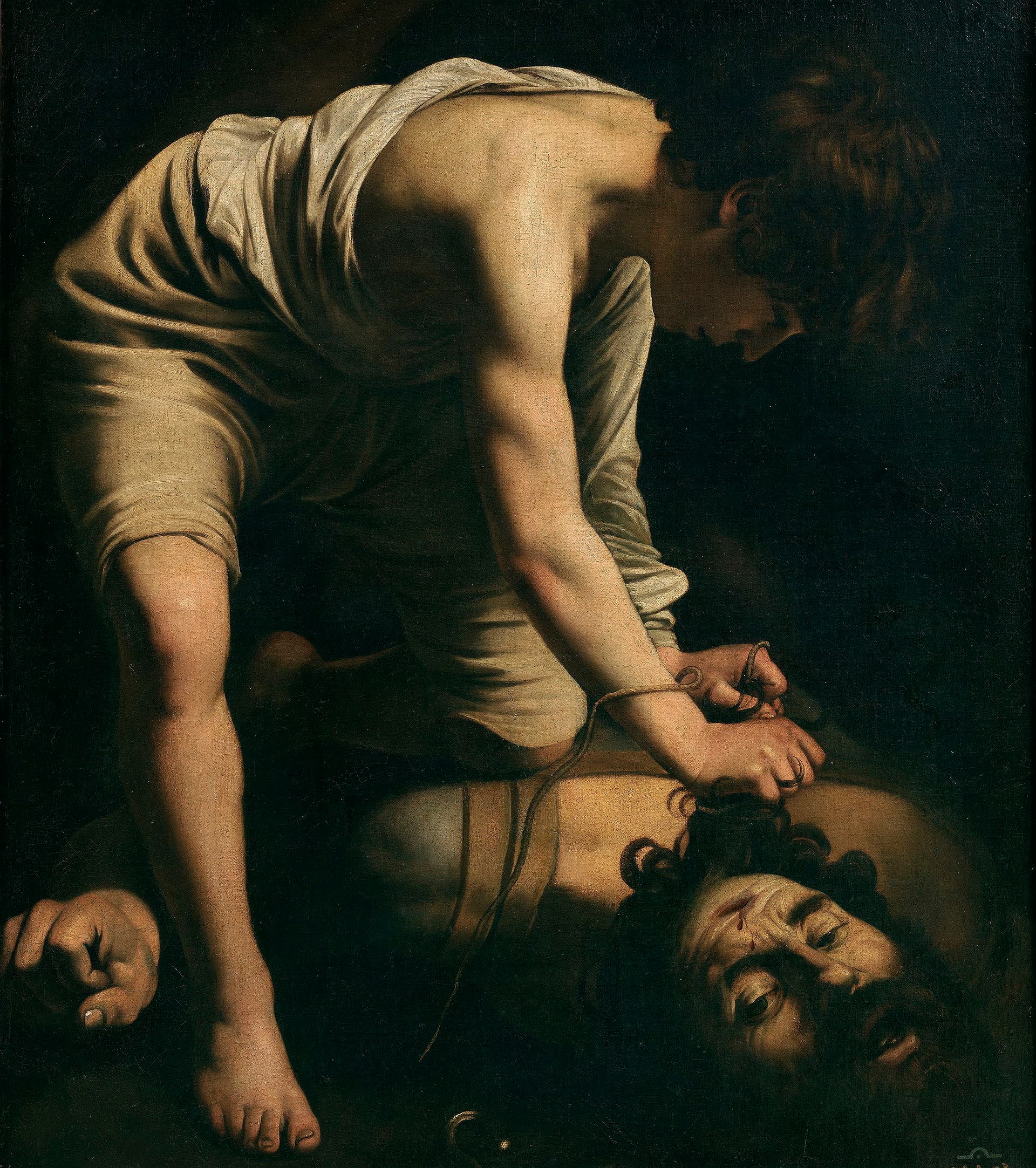
Caravaggio painted himself as Goliath, the head he has the boy hold up by the hair. The self-portrait under defeat is one of the oldest moves in art. What he was looking at — what he made us look at — is what every shadow project finally requires: the willingness to see what you would rather not see, and not look away.
The interior figure of the gender you are not.
Jung used anima and animus to name the interior figure of the gender one is not — the contrasexual aspect of the psyche. For men, anima: the inner feminine. For women, animus: the inner masculine. He believed the unintegrated contrasexual figure was where most relational difficulty came from, because the figure gets projected onto actual people and the relationship has to carry weight that doesn't belong to it.
The terms have aged in complicated ways. The strict binary of masculine and feminine that Jung worked with is not how contemporary psychology speaks. But the underlying observation survives the vocabulary: there is an interior register of one's psyche that does not match one's surface identity, and pretending otherwise has costs. Substitute language as needed. The structure he was pointing at is real.
Neuroscience again has nothing direct to say about an inner figure of any specific kind. What it does have is decades of research on how strongly we model other minds, how prone we are to projecting our unrecognized parts onto them, and how difficult it is to know whether what we feel about another person is mostly about them or mostly about us.
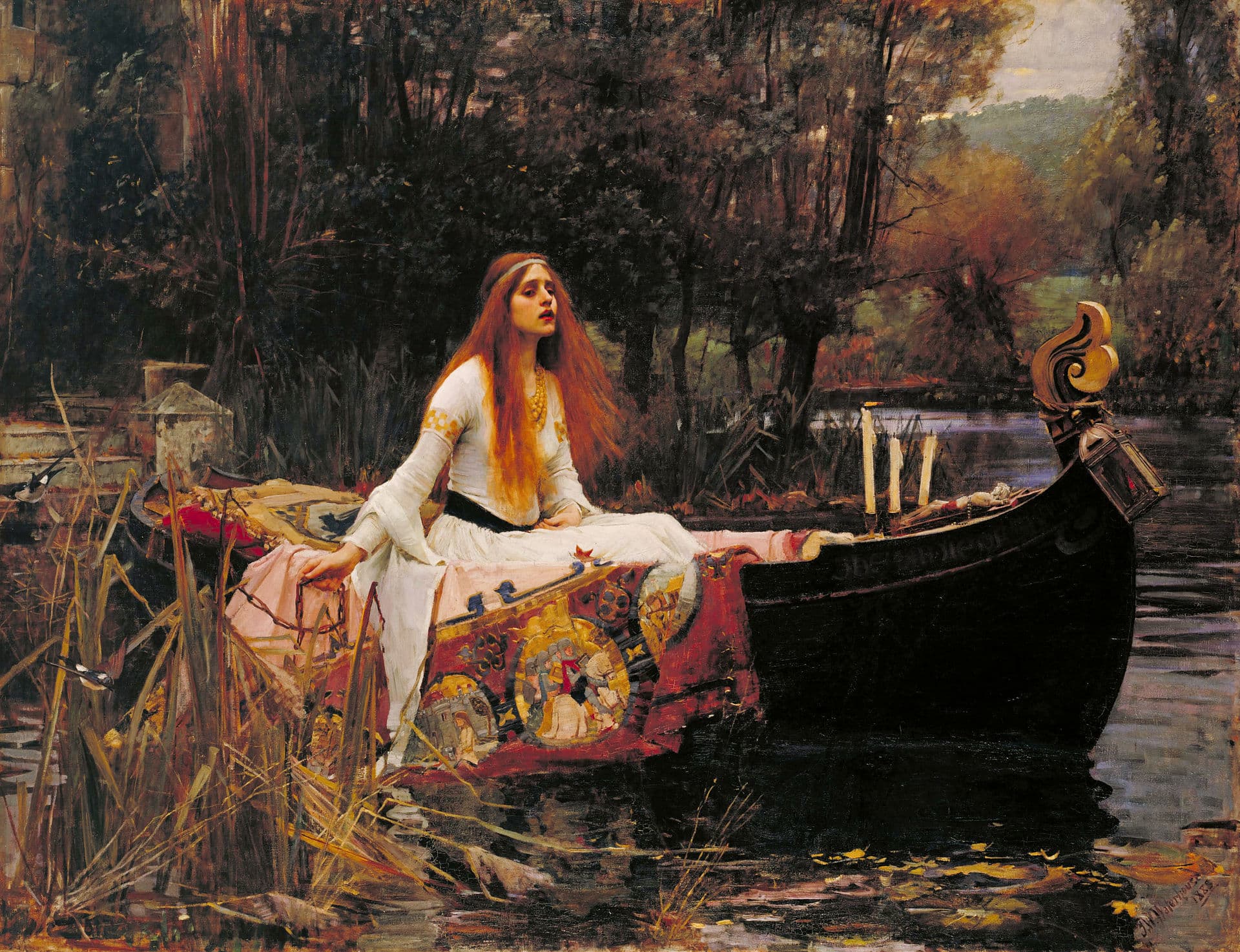
Waterhouse painted the Lady of Shalott leaving the tower. She has loosened the chain. She is going toward a death she half-knows. The painting is about an interior figure becoming visible enough to act, and the cost of that visibility. Whatever you call this figure today, the moment she steps into the boat is still a real moment in the felt life of being a self.
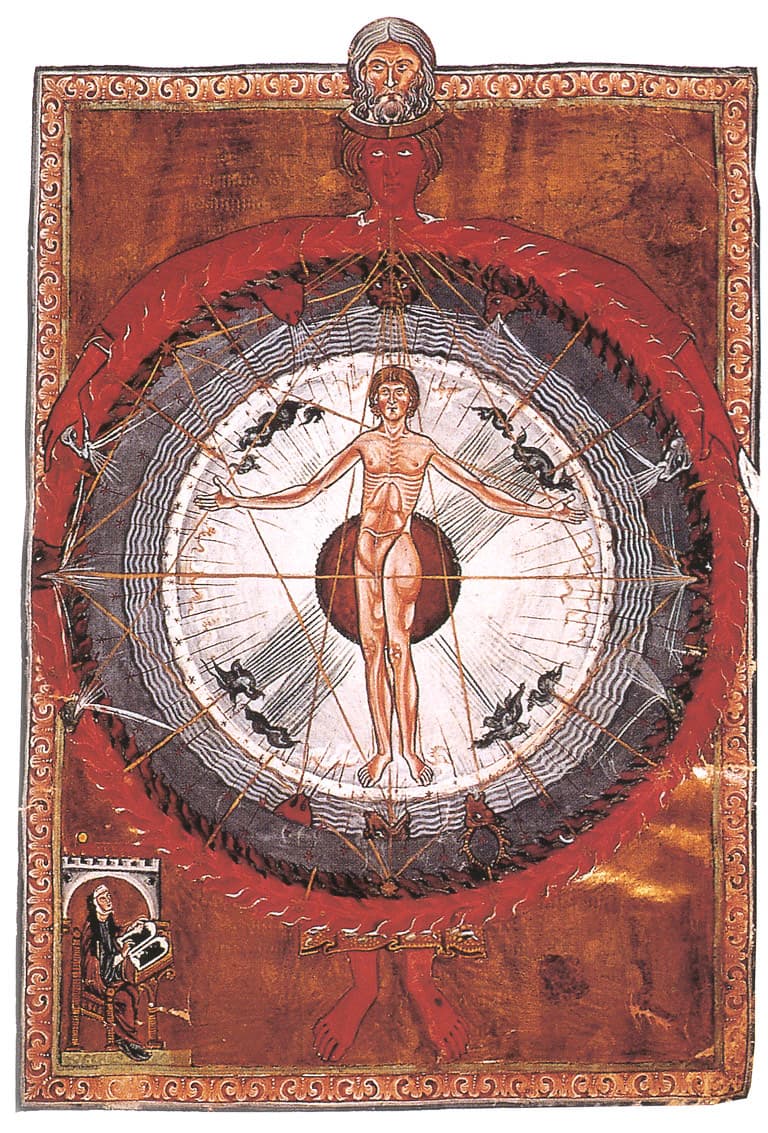
The whole of which the conscious self is a small part.
The Self — capitalized — was Jung's term for the whole psyche, including the conscious ego and the much larger unconscious of which the ego is a small lit room. The lifelong work of individuation, for Jung, was the slow, often unwanted process of making more of that whole liveable to consciousness.
The danger of the word, especially in pop usage, is that it sounds grand. Authentic self. True self. The wellness industry has done damage here. Jung's Self is not a perfected inner essence to be uncovered. It is the larger field a person actually lives inside, much of which they can't see and will never fully see. The work is honest commerce with that field, not arrival.
Contemporary neuroscience does not endorse the term. What it does offer, increasingly, is evidence that the conscious self is a small fraction of the brain's work — that the default-mode network's quiet activity, implicit memory, predictive processing, and automatic affective appraisal carry most of the load. The architecture is not the metaphysics. But the architecture supports Jung's intuition that consciousness is the small part.
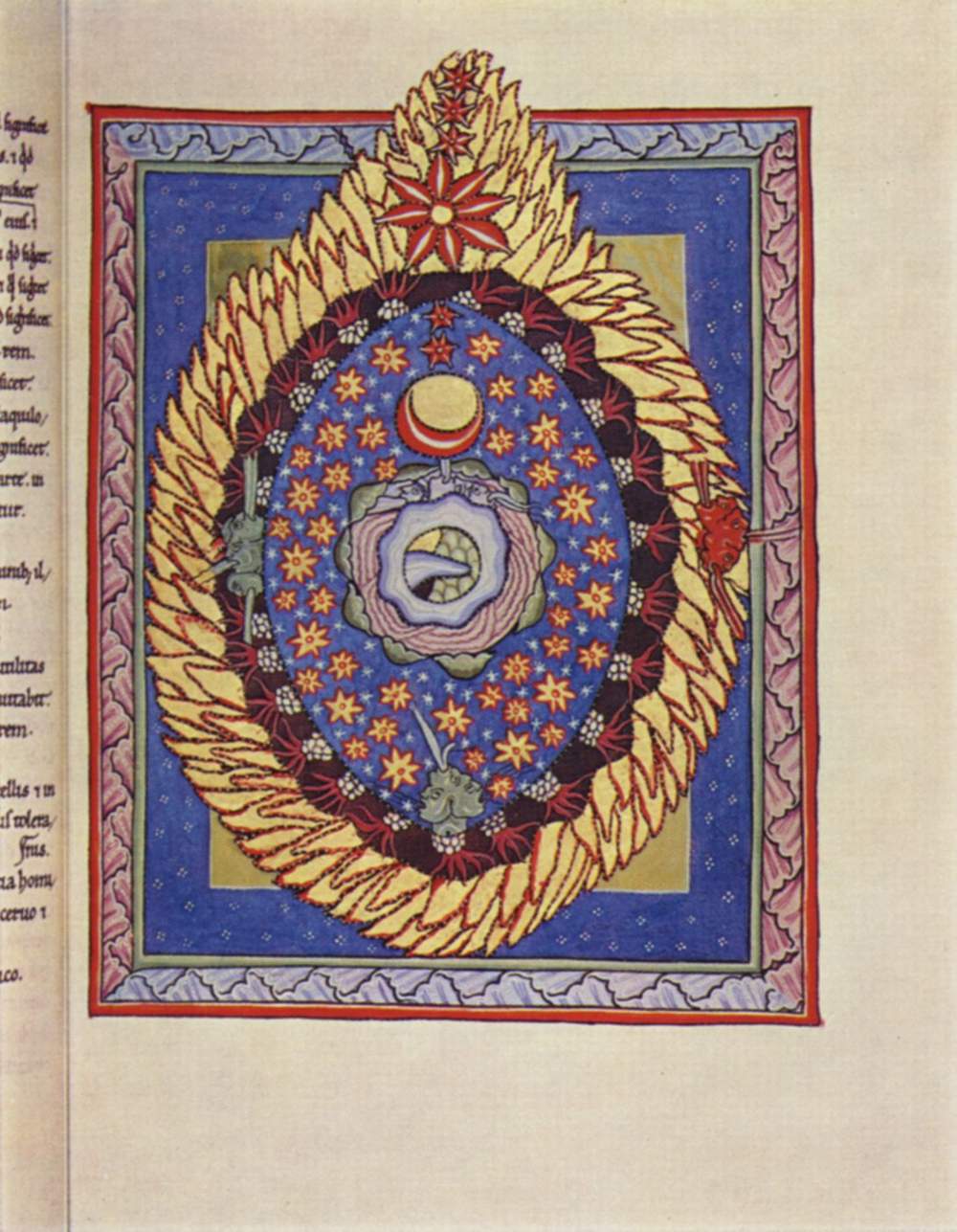
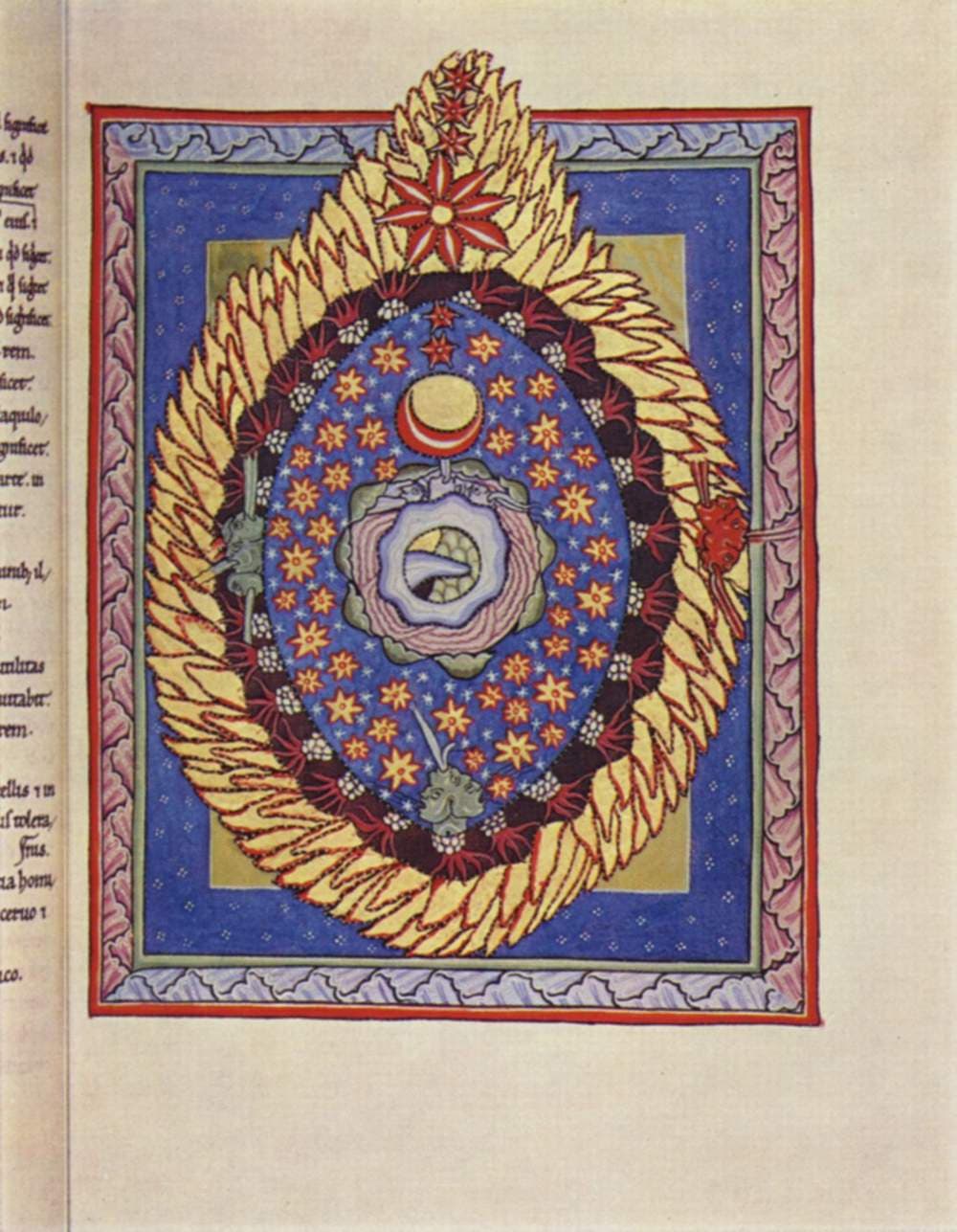
Hildegard of Bingen painted the figure of humanity contained within concentric circles of cosmos, four centuries before Jung. The Self in her image is not the human at the center; it is the whole arrangement. The center is contained, not central. Jung knew her work. He drew on it. The image earns its place in this room.
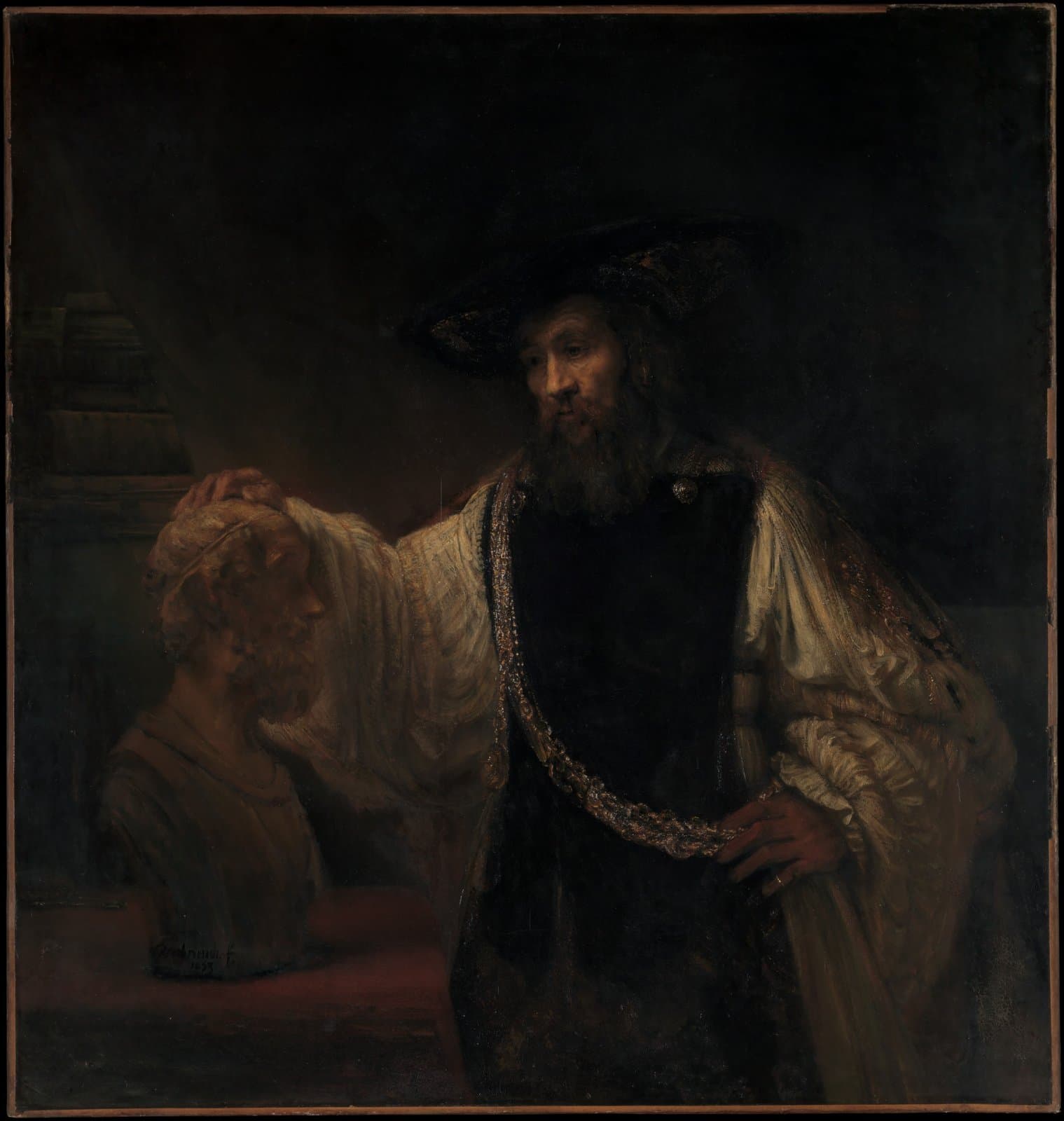
The interior guide. Not always old. Not always a man.
The Wise Old Man — Jung's term, with the obvious caveats about gender and age — names the interior figure who carries an authority the conscious ego doesn't possess. The grandfather in the dream who knows what to do. The voice in a difficult decision that arrives uninvited and turns out to be right. The teacher you internalized so completely that you can still consult them years after losing touch.
Jung's claim was that this figure shows up across cultures and centuries because the psyche genuinely organizes some of its wisdom outside conscious access, and presents it to consciousness in the form of a guide. The figure is real to the experience even when there is no actual elder in the room. Sometimes it appears as an old man, sometimes as a wise woman, sometimes as a child saying something that turns out to be load-bearing. The form varies. The function holds.
Neuroscience has no direct analogue. What it does suggest is that integration of learning over a lifetime produces patterns of automatic appraisal that the deliberative system can consult almost like an external source. Long-term meditators, expert clinicians, master artisans all describe a similar phenomenology: a knowing that arrives faster than thought. The mechanism is consolidation and pattern-recognition. The felt experience is closer to being advised.
Rembrandt painted Aristotle's hand on the head of Homer's bust. The living thinker meets the dead poet through touch. The chain of medallions around Aristotle's neck shows Alexander, the student who became another kind of master. The painting is about the inheritance of wisdom across centuries and across mortality — one Wise Old Man recognizing another, with the awareness that he too will become a bust someone else lays a hand on.
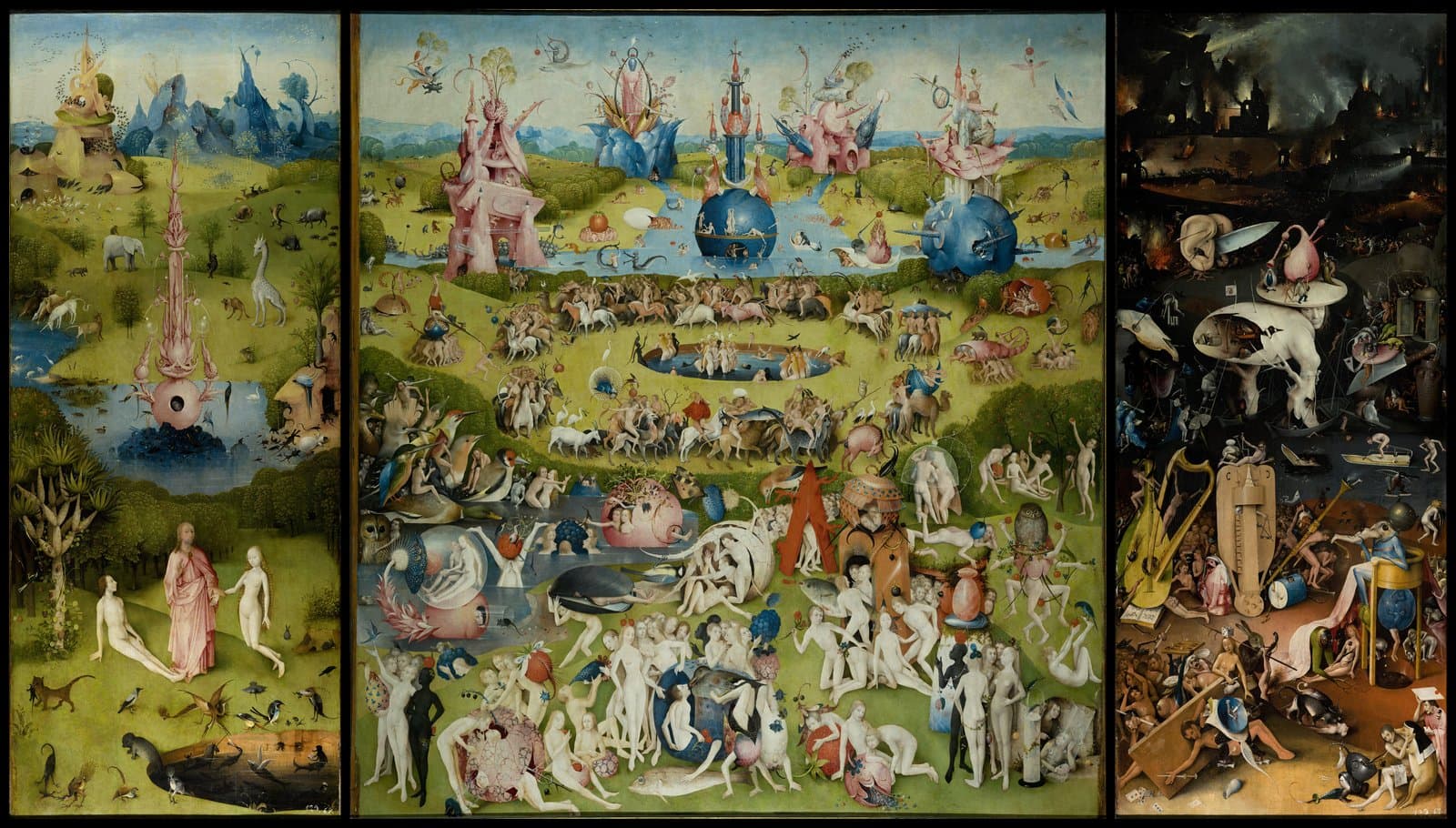
The boundary-crosser. The destroyer who clears the way.
The Trickster is the figure who breaks the rules to show that the rules are arbitrary — and, sometimes, to clear the way for what the rules were keeping out. Hermes and Loki, the medieval Fool, the coyote of certain Native traditions that this site does not appropriate. Jung studied the Trickster carefully because he saw the same figure recur across cultures and across centuries, doing the same disruptive work: revealing the seams of the constructed order by playing on them.
What the figure protects against is rigidity. A psyche that has organized itself too tightly around a particular self-image needs the Trickster to come along and overturn the table, sometimes humiliatingly, so that the disowned parts can re-enter. The Trickster is rarely admired in the moment. He is often retrospectively necessary.
Neuroscience has nothing to say about a Trickster. It does have evidence that rigid prediction models break down under enough surprise, that brittle self-concepts crack rather than bend, that what looks like insight often arrives only after a particular kind of disruption. The mechanism doesn't endorse the figure. The function the figure described still happens.
Bosch's triptych is the Trickster as cosmology. Eden, the strange wide garden where appetite is unleashed, and the consequences. None of the panels is the moral. The Trickster is the whole arrangement — what is crossed, what is crossed again, what cannot be put back the way it was.
How to look at a circle that is also a portrait of a psyche.
Jung started painting mandalas before he had a theory of them. Through the years of his break with Freud and his slow descent into what he later called his confrontation with the unconscious, circular images appeared in his notebooks — first as something he was compelled to draw, then as something his patients independently produced during periods of psychic upheaval, and finally as something he recognized across the visual traditions of medieval Europe, Tibetan Buddhism, alchemical manuscripts, Hindu yantras, Hildegard's illuminations, and the rose windows of cathedrals he had never planned to study.
What he came to believe, with appropriate hedging, was that the mandala is the symbolic expression of what he called the Self — the whole psyche of which the conscious ego is a small part. Not the metaphysical Self of any one tradition, but a pattern the psyche reaches for when it needs to organize itself: a center, a containment, a quaternity, an integration of opposites held in a single field.
How to look at one.
Jung had a practical method for looking at a mandala, his patients' or his own. The point was not interpretation in the usual sense — not a key that decodes the image — but a slower attending that lets the image do its work. Four questions, asked roughly in order:
- 01
What is at the center? Sometimes a figure, sometimes a flame, sometimes an empty point, sometimes nothing identifiable at all. The center is what the rest of the image is organized around. Whether it is occupied or empty, occupied by what, empty in what way — these matter.
- 02
What four things are around the center? Mandalas across traditions tend toward quaternity — four directions, four elements, four evangelists, four functions of consciousness in Jung's own typology. The four are not arbitrary; they are the rhythm by which the center is mapped into the field. Notice whether the four are balanced or one is heavier, whether one is missing, whether they repeat into eight or sixteen.
- 03
What contains it? Mandalas have boundaries — circles, walls, gates, sacred precincts. The boundary holds energy that would otherwise disperse. In the felt experience of looking, the containment is what makes the center possible. Without edge there is no center.
- 04
Where does it break? A working mandala is almost never perfectly symmetric. A crack in the boundary, a missing quadrant, a figure pulling sideways out of the frame. Jung paid close attention to these — not as flaws but as the place where the integration is incomplete and where the next work is waiting.
Why Jung kept coming back.
What Jung claimed about mandalas, and what he hedged about them, are worth separating. He claimed that mandalas appear spontaneously when the psyche is reorganizing itself — that they are part of the actual work of individuation, not just illustrations of it. He claimed that drawing them was a way to participate in that reorganization. He claimed the quaternity structure was not random but expressed something structural about how consciousness orients itself.
What he hedged was metaphysics. He did not claim the mandala was a portal to anything. He did not claim it was magical, or that drawing one would heal you. He treated mandalas as clinical data — observed reliably enough across patients and traditions to deserve careful description, and reserved judgment about anything beyond that. The wellness industry, in its appropriation, has dropped the hedge and kept the mystery, which is the wrong half to keep.
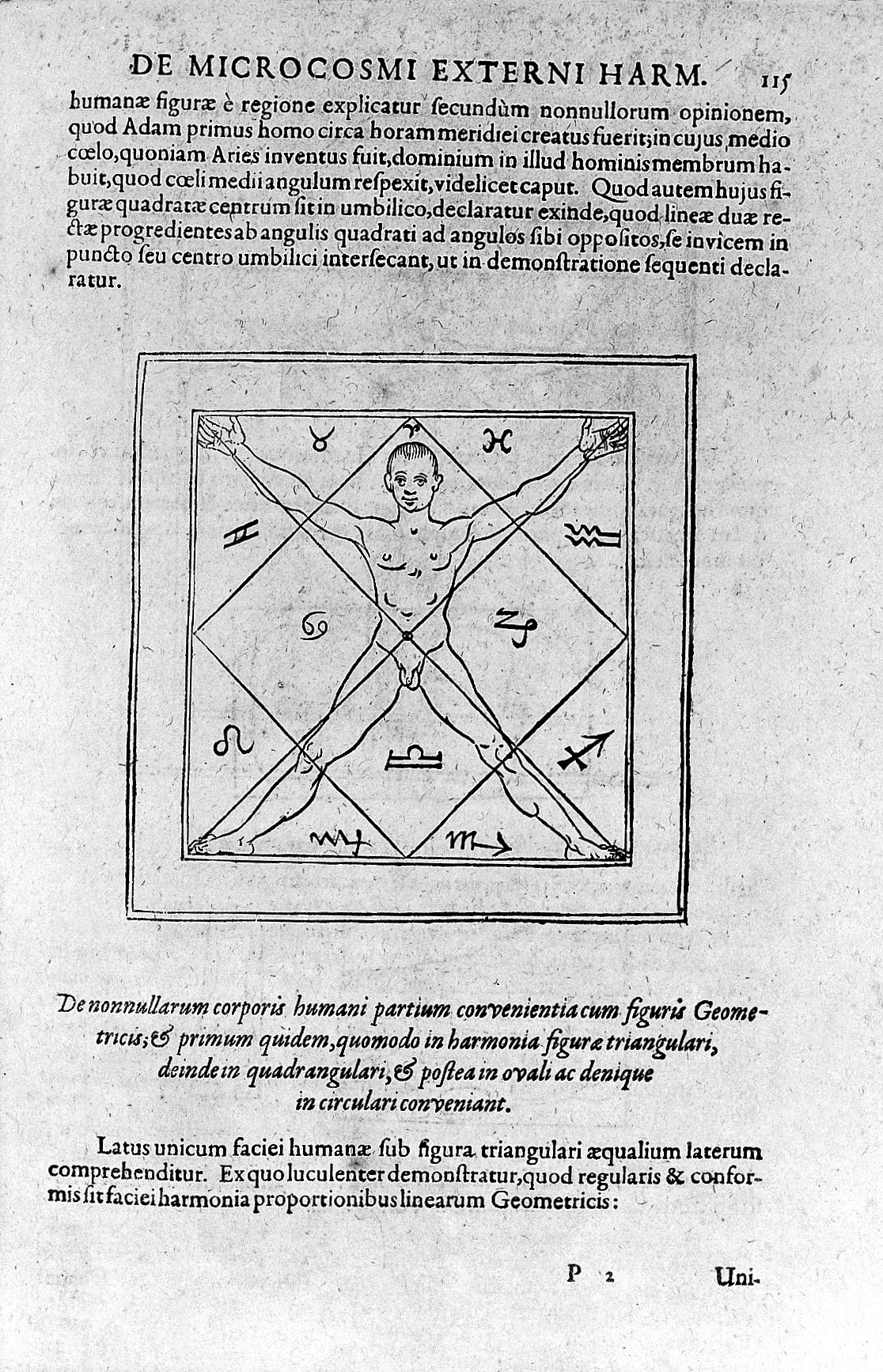
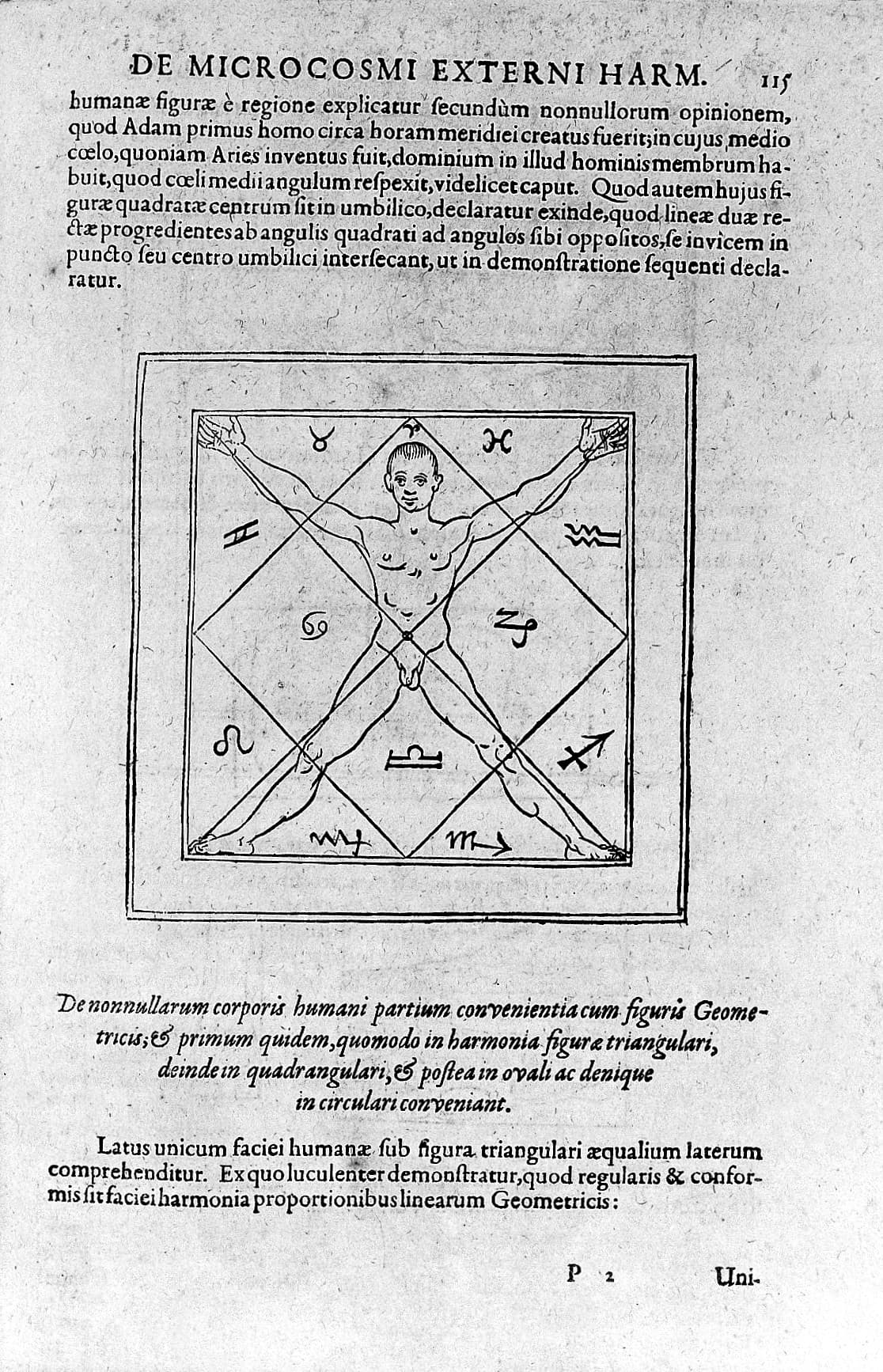
Looking at Fludd's engraving above or the Hildegard codex beside it, both made centuries before Jung was born, you can see what he was pointing at without endorsing the cosmologies they came from. A center. A quaternity. A containment. A break in the symmetry somewhere that lets the life of the image stay alive. The work of looking is real even when the metaphysics is contested.
A mandala is not a picture of a finished self. It is a picture of a self being worked on, sometimes by hands that did not know what they were drawing until it was drawn.
On Mandalas · ~700 words · 4 min readSame shape, different vocabularies.
Jung observed that mandalic forms recur across cultures with no plausible chain of transmission between them. Medieval Christian rose windows. Tibetan dependent-origination wheels. The Sri Yantra. The Mexica Sun Stone. European alchemical engravings. Same shape, organized differently, used for different work. The convergence interested him for the rest of his life. Below are seven, with what depth psychology sees in each — and what published neuroimaging literature would predict your brain to do while looking at them.
Pick any mandala below. The brain above (persistent across this site) shifts to the activation pattern published research on contemplative looking would predict for an image of that kind. Not a scan of you. Not a TRIBE prediction. A literature-informed synthesis — pedagogical, not personal.
Robert Fludd's engraving correlates the human microcosm with the cosmic macrocosm. Concentric rings of elements and faculties radiate from a central figure who is both contained by the cosmos and figured as its mirror. Fludd was a 17th-century English physician working in the hermetic-Paracelsian tradition; this image is one of many in his Utriusque Cosmi Historia diagramming the same intuition.
A Jungian readingJung admired Fludd. He read the alchemical tradition as a record of psychological work — the philosopher's stone as a symbol for the integrated Self. The microcosm-macrocosm framing in particular maps onto his claim that the individual psyche and the larger collective patterns are continuous in structure. Fludd's engraving, in Jung's reading, is one of the clearest visual statements that the self being worked on is also a self that already contains the cosmos in miniature.
The macro brain above is now displaying the literature-informed pattern below. Predicted, not measured. Composed pedagogically from contemplative-attention and visual-symmetry studies — not from TRIBE, which doesn't take images of mandalas as input.
- PrecuneusPrecuneus
Implicated in autobiographical memory, mental imagery, and visual-spatial integration.
78% - PCCPosterior cingulate cortex
A core node of the default-mode network. Active in memory, mind-wandering, and self-related thought.
68% - Angular Gyrus (R)Angular gyrus (right)
Implicated in numeracy, spatial cognition, and the default-mode network's right component.
65% - Angular Gyrus (L)Angular gyrus (left)
A heteromodal hub: involved in semantic integration, metaphor, and the default-mode network.
62%
Why this composition, briefly: contemplative looking quiets the amygdala's salience pull, lifts the precuneus and PCC (default-mode integration, visuospatial), engages the angular gyri (heteromodal hub), and gently recruits the dmPFC for self-referential processing without strong emotional load. The lowness of the amygdala is part of why this kind of attention feels different from arousal.
These are not parts of the brain. They are not regions on a scan. They are patterns in the felt life of being a self — patterns old enough to have shown up in every culture's mythology, recurring enough to have made one psychologist try to give them names.
Some of what Jung saw has been confirmed in different language by neuroscience. Some has not. Much of it lives in a register where neither neuroscience nor depth psychology can fully claim the territory.
This is what makes them worth keeping both languages alive for.